
Meet Rebecca
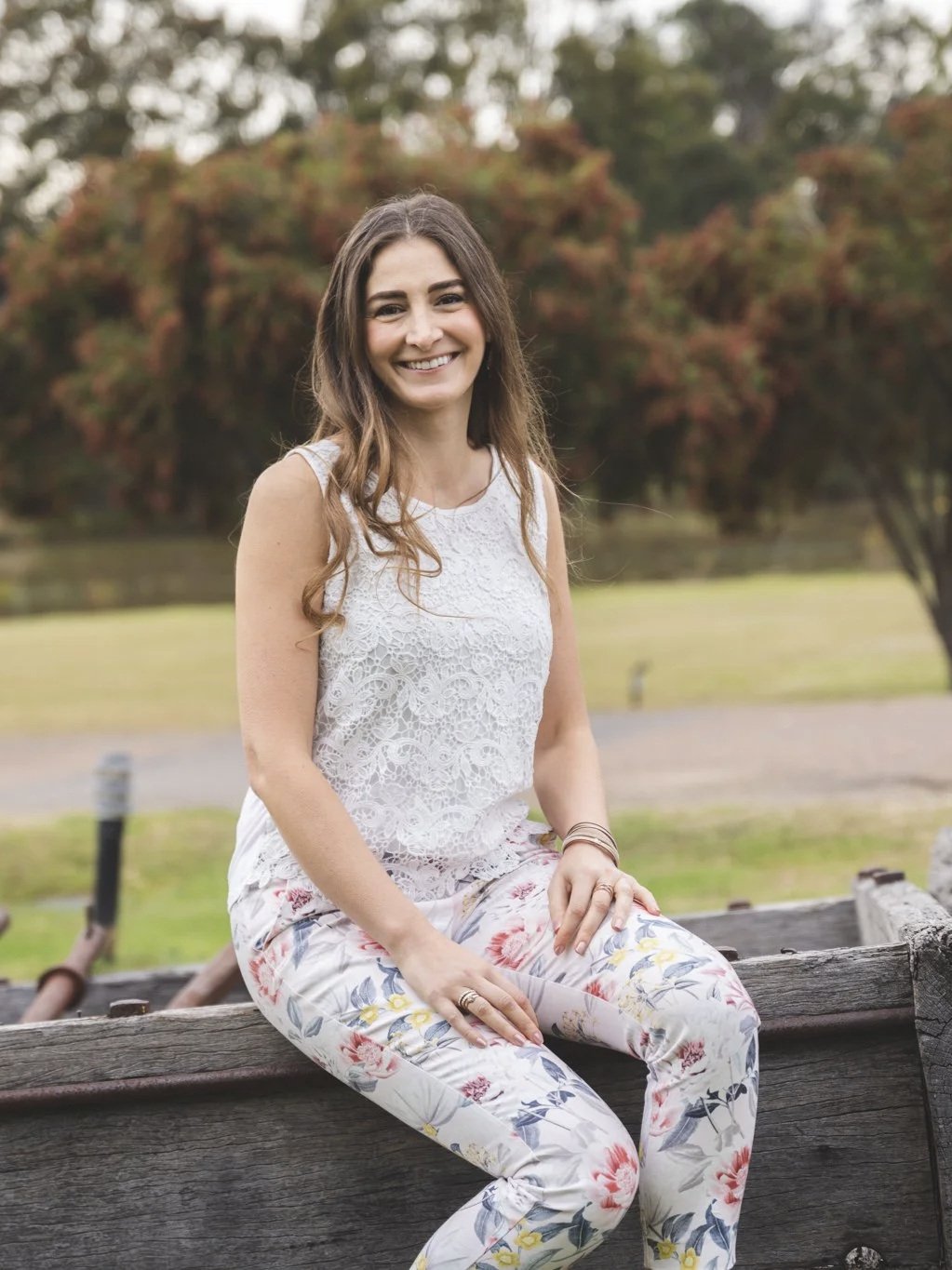
Who am I?
Hi, I'm Rebecca — and I'm genuinely glad you're here.
I'm a clinical psychologist with a Masters from the University of Wollongong, and I've worked across private practice, not-for-profit organisations, and the public health system.
Before I became a psychologist, I spent years working as a project manager in the IT industry — a world that runs on performance, deadlines, and the quiet expectation that you just keep going no matter what. That experience gave me a firsthand understanding of workplace stress, burnout, and what it feels like to be highly capable on the outside while struggling privately.
I work with people who are functioning — sometimes brilliantly — but who have lost touch with how they actually feel. People who are anxious, exhausted, or navigating a life transition that's left them wondering who they are and what they actually want.
I bring not just clinical expertise to this work, but a deep personal commitment to understanding the human experience from the inside out — because I believe the best guides are those who are also doing their own work.
My approach is compassionate, curious, and completely non-judgmental. I'm not here to tell you what's wrong with you. I'm here to help you make sense of yourself.
In our work together I draw on a range of evidence-based approaches including CBT, ACT, IFS, DBT, Schema Therapy, and mindfulness-based interventions — always tailored to what's right for you specifically.

My education
I wasn't always a clinical psychologist — and that winding path is actually part of what makes me good at what I do.
I began my university journey studying computer science, spent years working as an IT project manager in the corporate world, and eventually found my way to psychology. It wasn't the most direct route, but it gave me a depth of real-world experience that purely academic training never could.
My formal qualifications and ongoing training include:
Body Psychotherapy — 3 year professional training, currently in progress
Master of Psychology (Clinical) — University of Wollongong, graduated with Distinction
Graduate Diploma of Psychology + Honours — University of Sydney
Bachelor of Computer Science and Technology — University of Sydney
Sometimes the most meaningful paths are the ones that meander a little. On the plus side — I can also fix my own computer. How many psychologists can say that?!😄

My areas of interest
The areas I'm most passionate about working in include:
— Burnout and the particular exhaustion of high-functioning people who have been running on empty for too long
— Depression — including the kind that doesn't look like sadness, but shows up as flatness, exhaustion, numbness, or simply going through the motions of a life that's lost its colour
— Anxiety — including the kind that's hard to name or explain, that hums quietly in the background even when everything looks fine on the outside
— Perfectionism and the relentless internal pressure that comes with it
— Self-esteem, self-worth, and self-confidence
— Challenges with emotions - whether that's feeling too much of something like anxiety or anger, or not enough of something like joy, contentment or peace
— Relational patterns — exploring how early attachment experiences and past relationships shape our current connections, and working through the blocks that keep us stuck in the same cycles
— Grief, loss and bereavement, including loss of identity and relationship endings
— Life transitions and the identity shifts that come with moving from one stage of life to another
— The intersection of psychology and spirituality - for those for whom faith, meaning, and spiritual experience are an important part of their inner world
— Workplace stress, career transitions, and the psychological impact of high-pressure environments
If any of this resonates with what you're navigating, I'd love to hear from you.

My publications and past experience
Earlier in my career I had the privilege of combining my background in technology with my clinical training to contribute to something I'm deeply proud of.
As part of a multidisciplinary research team, I contributed to the development and scientific evaluation of iBobbly — a clinically validated mobile app designed for suicide prevention in Aboriginal and Torres Strait Islander youth. This work sits at the intersection of technology, clinical psychology, cultural responsiveness, and genuine community need — and seeing it proven effective through rigorous research remains one of the most meaningful experiences of my professional life.
For those interested in the research underpinning this work, the publications are listed below.
Shand, F., MacKinnon, A., O’Moore, K., Ridani, R., Reda, B., Hoy, M., Heard, T., Duffy, L., Shanahan, M., Jackson-Pulver, L., Christensen, H. (2019). The iBobbly Aboriginal and Torres Strait Islander app project: Study protocol for a randomised controlled trial. Trials, 20(1):198.
Ridani, R., Torok, M., Shand, F., Holland, C., Murray, S., Borrowdale, K., Sheedy, M., Crowe, J., Cockayne, N., Christensen, H. (2016). An evidence-based systems approach to suicide prevention: guidance on planning, commissioning, and monitoring. Sydney: Black Dog Institute.
Ridani, R., Shand, F., Christensen, McKay K., H., Tighe, J., Burns, J., Hunter, E. (2015). Suicide prevention in Australian Aboriginal communities: A review of past and present programs. Suicide and Life Threatening Behaviour, 45(1), 111-140.
Shand, F., Ridani, R., Tighe, J., Christensen, H. (2013). The effectiveness of a suicide prevention app for Indigenous Australian youths: Study protocol for a randomized controlled trial. Trials,14:396
Tighe, J., Shand, F., Ridani, R., Mackinnon, A., De La Mata, N., Christensen, H. (2017). Ibobbly mobile health intervention for suicide prevention in Australian Indigenous youth: A pilot randomised controlled trial. BMJ Open, 7(1), e013518.